
Christian theology: a case method approach
This book bridges the gap between the theological reflection and human experience and encourages fruitful dialogue between divergent interpretations. Organized around central motifs in the Apostles…
- Edition
- -
- ISBN/ISSN
- 0 281 02980 6
- Collation
- xv, 272p.; 22 cm.
- Series Title
- -
- Call Number
- 230 EVA c
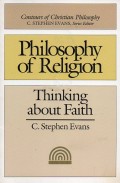
Philosophy of religion: thinking about faith, c.1-2
Is there a God? How can we know? These questions are the focal points of the philosophy of religion. The author wrestles with these issues looking at the classical arguments for God's existence and…
- Edition
- -
- ISBN/ISSN
- 0-85110-742-7
- Collation
- 191p.; 21 cm.
- Series Title
- -
- Call Number
- 200.1 EVA p.1-2

The world of Jesus and the early church: identity and.., c.1-2
Religious communities that possess sacred documents define themselves, at least in part, by how they understand and interpret their sacred text and how those sacred texts inform the community. The …
- Edition
- -
- ISBN/ISSN
- 978-1-59856-825-7
- Collation
- xvi,257p.; 23 cm.
- Series Title
- -
- Call Number
- 270.109 EVA w.1-2
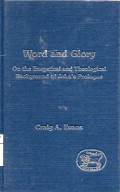
Word and glory
Word and Glory challenges recent claims that Gnosticism, especially as expressed in the Nag Hammadi tractate Trimorphic Protennoia, is the most natural and illuminating background for understanding…
- Edition
- -
- ISBN/ISSN
- 1-85075-448-9
- Collation
- vi,243p.; 22cm.
- Series Title
- -
- Call Number
- 226.5 EVA w

The historical Christ & the Jesus of faith: the incarnational narrative...
The New Testament contains a story about Jesus of Nazareth. The Christian Church has always understood this narrative as the story of the Son of God, who redeemed the fallen human race by his life,…
- Edition
- -
- ISBN/ISSN
- 0-19-826397-X
- Collation
- xi, 386p.; 23 cm.
- Series Title
- -
- Call Number
- 232.908 EVA h

The book of Mark
Mark told it like it was so you could see Jesus as He is. Each Gospel, or biography of Jesus, is unique. The bold Book of Mark was written to the ruling Romans. This fast-paced narrative is the sho…
- Edition
- -
- ISBN/ISSN
- 978-1-4185-0994-1
- Collation
- xviii, 333p.; 24 cm.
- Series Title
- -
- Call Number
- 226.3 EVA b
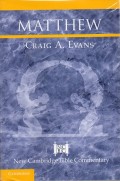
Matthew, c.1-2
This book is a verse-by-verse analysis of the New Testament Gospel of Matthew. It provides a comprehensive introduction to the gospel, which describes the world of Jesus and his first followers. Th…
- Edition
- -
- ISBN/ISSN
- 978-0-521-01106-8
- Collation
- xxii,543p.;23cm
- Series Title
- -
- Call Number
- 226.2 EVA m.1-2

We have been believers: an African-American systematic..
In this, the first full-scale black systematic theology in twenty years, James Evans emerges as a major and distinctive voice in American theology. Seeking to overcome the chasm between church prac…
- Edition
- -
- ISBN/ISSN
- 978-0-8006-2672-3
- Collation
- xii, 178p.; 23 cm.
- Series Title
- -
- Call Number
- 230.089 EVA w
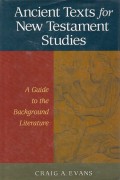
Ancient texts for New Testament studies: a guide to the.., c.1-3
One of the daunting challenges facing the New Testament interpreter is achieving familiarity with the immense corpus of Greco-Roman, Jewish, and pagan primary source materials. From the Paraphrase …
- Edition
- -
- ISBN/ISSN
- 978-1-56563-409-1
- Collation
- 539p.; 23 cm.
- Series Title
- -
- Call Number
- 225.066 EVA a.1-3

Subjectivity religious belief: an historical..
Uncovers and examines a common structure to the arguments of Immanuel Kant, Soren Kierkegaard, and William James in regard to the issue of knowledge and belief. These three diverse philosophers fro…
- Edition
- -
- ISBN/ISSN
- 0-8028-1712-2
- Collation
- xii, 223p.; 21 cm.
- Series Title
- -
- Call Number
- 200.1 EVA s




 Computer science, information & general works
 Philosophy & psychology
 Religion
 Social sciences
 Language
 Pure Science
 Applied sciences
 Arts & recreation
 Literature
 History & geography